


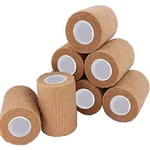

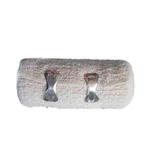

Woven Elastic Bandage
Elastic Bandage Use
Elastic bandages are widely used for external dressing of various parts of the body, field training, trauma first aid, etc. They are mainly used for surgical dressing care.
1. High elasticity, unrestricted movement of the joints after use, no shrinkage, no obstruction of blood circulation or displacement of the joints.
2. The elastic bandage can exert pressure and stability on the ankle joint, while tightening the skin to reduce the impact on the muscles. Practically speaking, it is easy to wear, comfortable and reusable. Students who love to play must know how to fix their ankles with elastics!
3. The compression effect of the elastic bandage on the ankle joint comes from the tension of the bandage, so it is necessary to maintain a uniform and appropriate force to tighten the bandage; at the same time, avoid excessive force.
4. Please use elastic bandages during exercise or functional exercise after injury. The bandages must be removed twice a day for at least half an hour each time to maintain the blood supply to the feet. Avoid folds or protrusions when wrapping, which can crush the skin.
Product Description
Material:70%polyester;30%rubber
Weight:g/m*m 70g, 90g,100g,110g etc
Clip:with or without clip,elastic band clips or metal band clip
Length(Stretched): 4m,4.5m,5m
Width: 5cm, 7.5cm, 10cm, 15cm
Basic packing:individually packed in cellophane
Note:Customized specifications also available
Here are some tips for Woven Elastic Bandage:
Roll up the bandage
If the bandage isn't already rolled up, roll it up so that the start of the roll faces up.
Wrap in a spiral
Wrap the bandage in a spiral pattern, overlapping each turn by about half the width of the bandage. This will create a double-layer effect and provide sustained pressure.
Don't wrap too tightly
Avoid wrapping so tightly that you impair circulation to the limb. You can use a bandage with a rectangle drawn on it to help you apply the correct tension. When stretched to the correct tension, the rectangle will turn into a square.
Secure the bandage
You can secure the bandage with safety pins, tape, or elastic clips.
Prepare the wound
Before applying a bandage, make sure the wound is clean and dry. You can clean the wound with mild soap and water and pat it dry with a clean cloth or sterile gauze.
Position the limb
Keep the limb in a neutral position. For example, when wrapping an ankle, you can hold it at a 90-degree angle.
Start at the end
Start wrapping at the furthest end of the limb. For example, when wrapping a foot, you can start at the top of your foot beneath your toes.
Here are some examples of how you can apply elastic bandages to different parts of the body:
Ankle
You can wrap an ankle to help prevent swelling. Start by wrapping the bandage around the ball of your foot once, then circle the arch of your foot. You can also try wrapping from the anterior aspect of the foot to the medial side, then under to the plantar side, and up the lateral side.
Leg
You can wrap a leg by starting just above the ankle and continuing up the leg, overlapping each layer by about half the previous layer. You can end at calf level and secure the bandage with elastic clips or by smoothing down the end if you're using a self-adhering bandage.
Wrist
You can wrap a wrist by wrapping the bandage around the hand a few times, starting at the base.
Manufacturing Process

About us


Our Exhibitions


Hot Tags: woven elastic bandage, China woven elastic bandage manufacturers, suppliers, factory, Elastoplast Compression Bandage, Elastic Bandage for Thigh, Woven Elastic Bandage, Orthopedic Elastic Bandage, Sprained Wrist Elastic Bandage, Reusable Bandage Wrap
Previous
Orthopedic Elastic BandageNext
No InformationYou Might Also Like


Send Inquiry